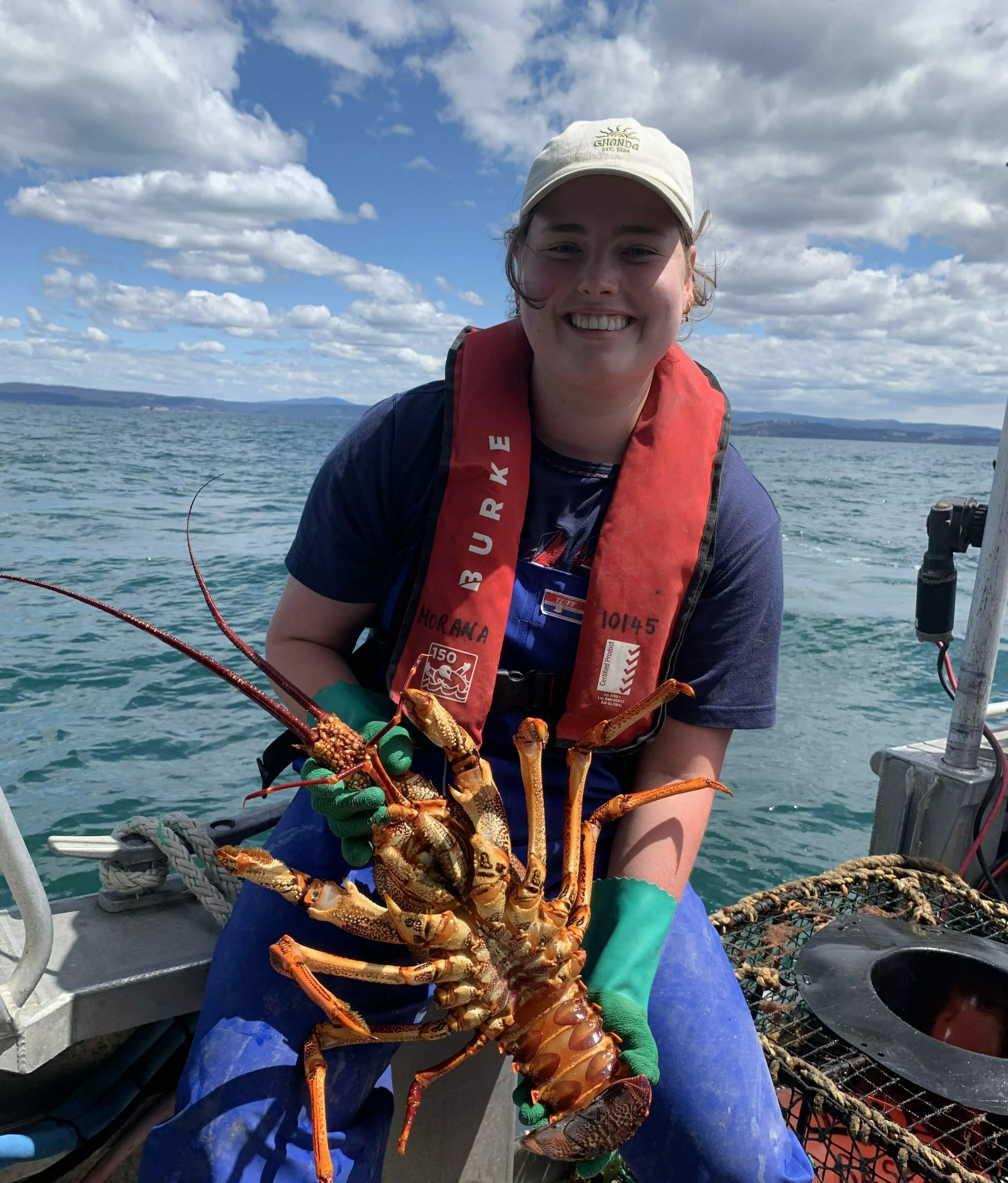
Have you ever shot yourself in the leg and gone, “Yep, this is the career for me”? No? Fair enough. I did… with a lobster‑tagging gun… and somehow that didn’t stop me becoming a marine scientist.
I’ve always loved the ocean, and not just because of the colourful fish or the little surprises hiding in the reef, but the stories behind them. When I was little, I visited the Great Barrier Reef and was completely hooked. The marine biologists there could turn complicated science into something exciting and easy to understand, and I remember thinking…. I want to do that too!
After Year 12, I moved from Queensland to Tasmania to study Marine and Antarctic Science. Since then, I’ve had some pretty wild research adventures: three days on a boat trapping rock lobsters (tagging gun incident included), cutting up Antarctic ice cores, and doing snorkel surveys where I counted nearly 200 sea stars in one tiny patch of reef, which, for the record, is a ridiculous number of sea stars.
Currently, I’m using underwater video from BRUVS (Baited Remote Underwater Video Systems), science communication, and visual media to understand how people interpret marine research. It basically means I watch endless clips of fish, seals, and sharks going about their day like they’re auditioning for ocean reality TV. Using this footage, I’m running a national survey to test the best ways to explain marine conservation to Australians, so hopefully more people can see the ocean as important (and as amazing) as I do.