As a kid, I was fascinated by animals. I would spend hours watching TV shows and reading about odd and fascinating creatures from all over the world. From the false water cobra in South America to the fossa in Madagascar, I dreamed of travelling the globe to study as many species as I could. That childhood dream helped lead me toward a life in wildlife research and conservation!
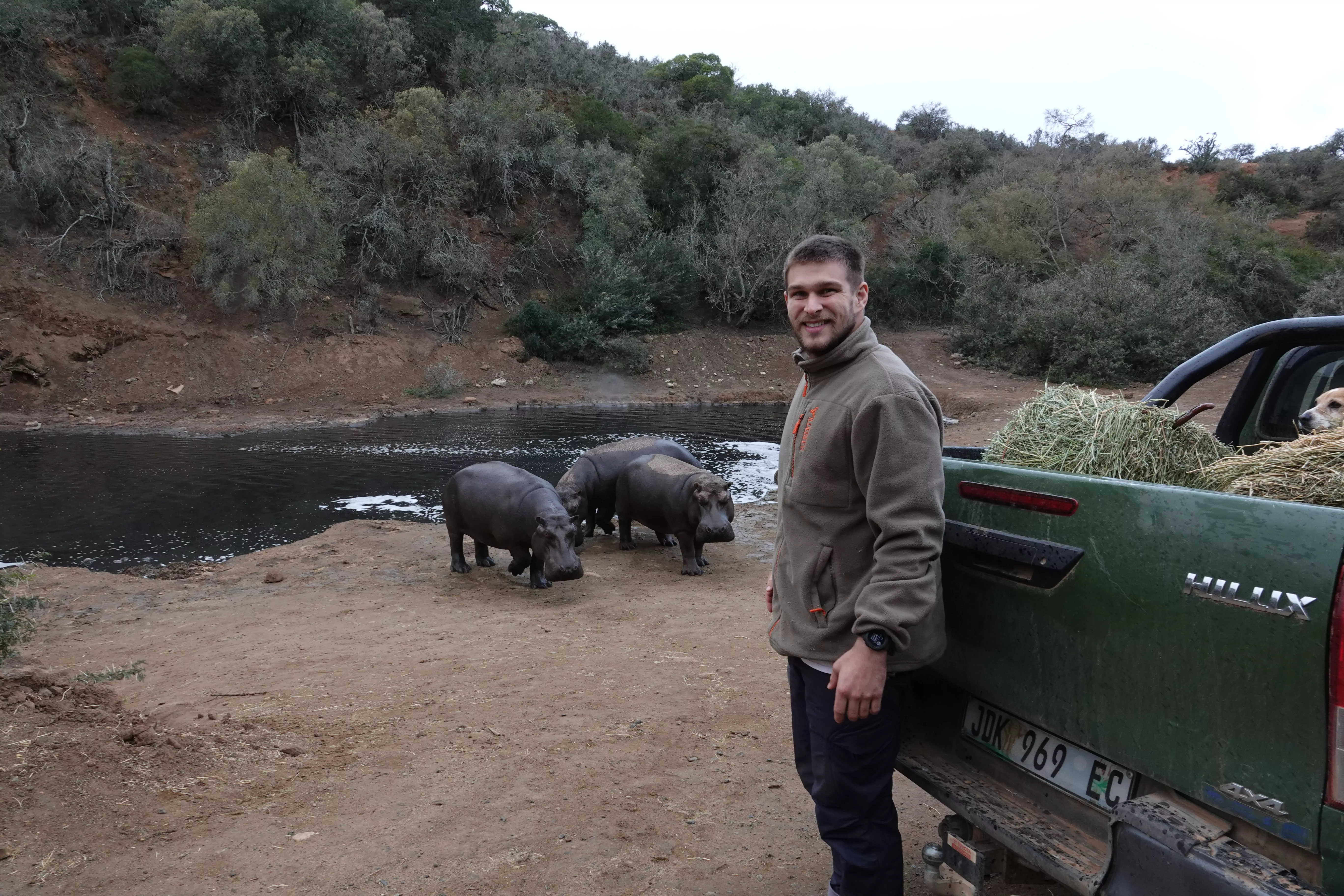
One important part of my journey was my time in South Africa. I worked at a wildlife farm, a game reserve, and a rhino rescue centre. I helped care for animals, monitor wildlife, and support capture and relocation work for many different species. I also worked with the anti-poaching unit, doing patrols and working with the guard dogs. My experience in South Africa showed that working overseas was not just a distant dream but an attainable reality.
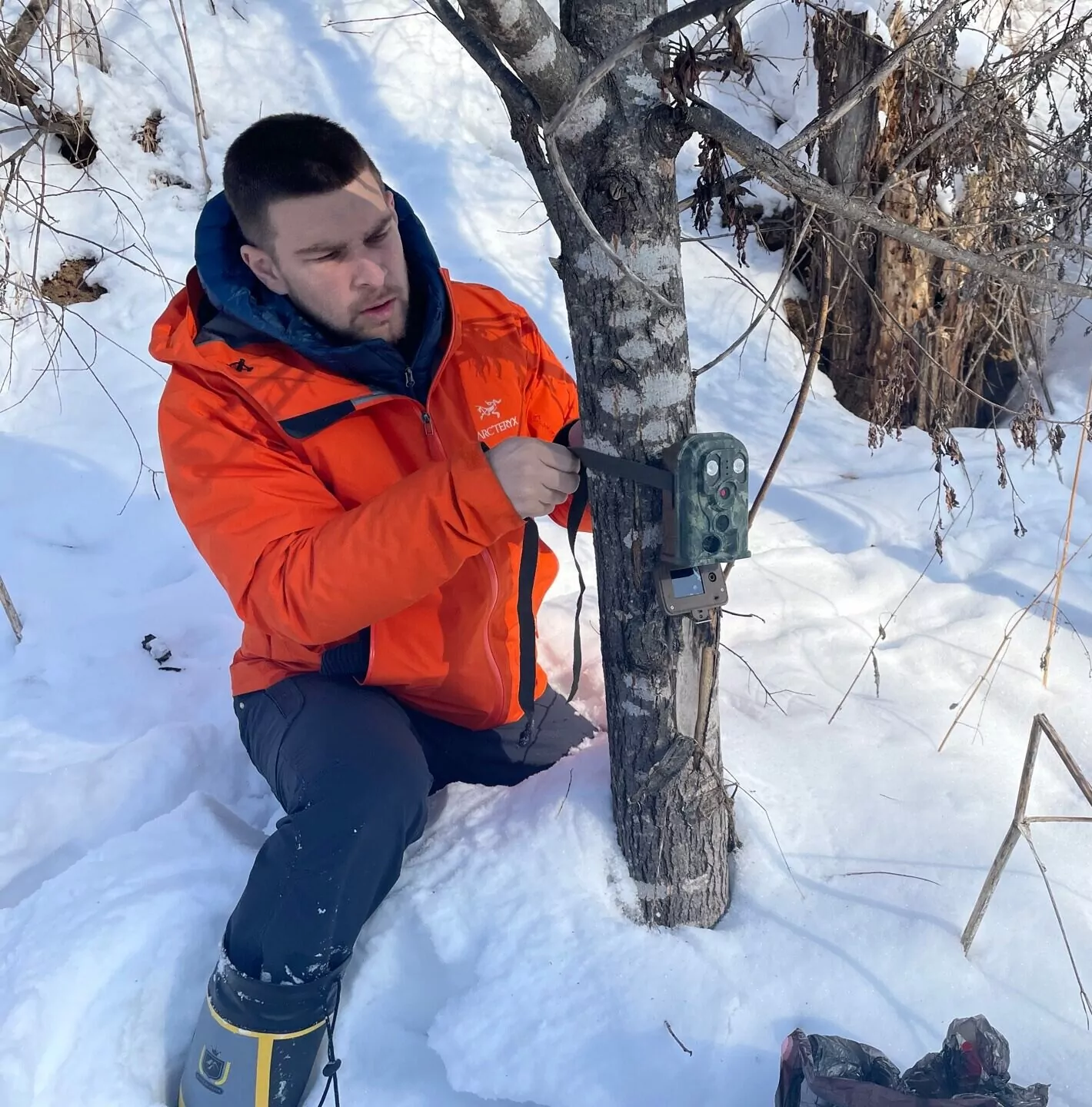
After that, I moved to China to pursue my next adventure. I found myself in a new country, trying to speak a new language, and researching in a completely different environment. I studied Eurasian otters and how farms can change where they live. I spent time in the field looking for signs of otters, setting camera traps, collecting scat, and working with local researchers. Living and studying in China taught me how to communicate despite a language barrier and showed me the importance of community involvement in conservation.
I now live in Tasmania, where I spend my time investigating the relationship between wallabies and pine plantations. I use tools such as drones, thermal cameras, camera traps, and environmental DNA to learn more about wallabies. In the future, I hope to keep travelling, studying wildlife, and using science to help protect animals and the places they live!