For as long as I can remember, I have been obsessed with questions at the very edge of our understanding. I’d look up at the night sky and wonder: Are we alone? What actually happens inside a black hole? Why is there something rather than nothing?
I fell in love with the mystery of not knowing, and the thrill of trying to find the answers. That is what drew me to math. I loved it, not because it was easy, but because it felt like a secret code. Think about it: we only knew black holes existed because they popped out of a math equation long before anyone ever actually saw one! That sense of discovery led me straight into studying space.
But somewhere along the way, I had a realisation. Some of the most complex, beautiful, and urgent mysteries aren’t millions of lightyears away in deep space. They are right here, on our own planet. I shifted my focus towards studying the heartbeat of our planet: Antarctica.
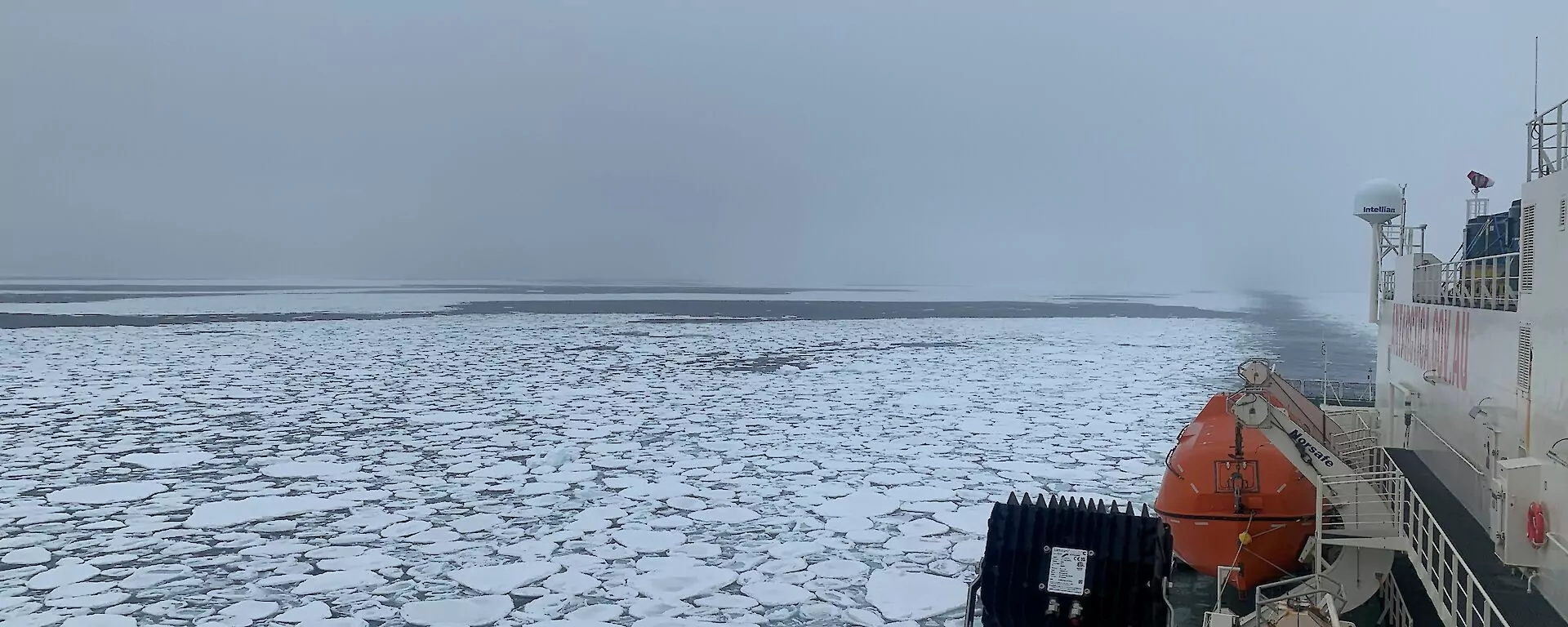
Most people picture Antarctica as this frozen, still place at the bottom of the world. But it’s actually one of the most dynamic, restless environments on Earth. It has a literal pulse: a rhythm of growing and shrinking sea ice that keeps our entire global climate stable. But lately, that pulse has started to skip a beat. And that’s the mystery I’m trying to solve.
In a way, I’ve found myself right back where I started: staring at a massive, beautiful puzzle. Science isn’t a dusty textbook or a list of facts to memorize. It is a creative, messy, deeply human adventure. You don’t have to be a perfect student or a genius to do it. I’m certainly not! You just have to be willing to ask “why?” and brave enough to follow the mystery wherever it takes you.